
Konjac glucomannan
Satiety and weight management
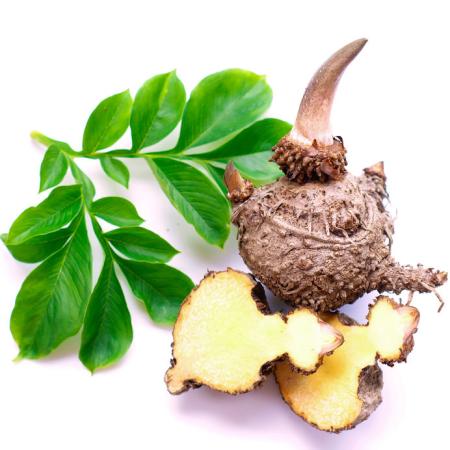
Konjac Glucomannan is a natural polysaccharide obtained from Amorphophallus konjac.
Traditionally consumed during periods of food shortage, this ingredient is now used for weight loss thanks to its excellent water retention capacity. When consumed with water, Konjac Glucomannan swells in the stomach, slows gastric emptying and provides a feeling of satiety.
Elementa offers a wide range of Konjac glucomannans to meet the needs of consumers and laboratories in terms of efficacy, bulk density, particle size, viscosity and concentration.
These products are also available with organic certification. 
1. What is konjac glucomannan?
2. Konjac glucomannan structure
3. Konjac glucomannan analytical methods
1. What is konjac glucomannan?
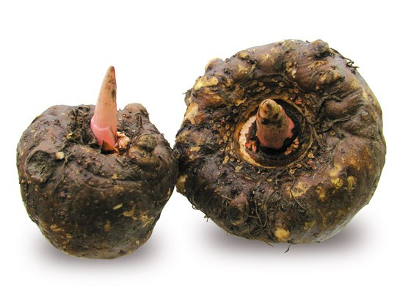
Konjac glucomannan is composed of polysaccharides derived from the tubers of Amorphophallus konjac. This traditional crop has been cultivated in Asian countries for more than 2,000 years.
These ingredients can contain up to 95% glucomannan, a water-soluble hydrocolloid obtained from konjac flour. Glucomannan is also a dietary fibre and is concentrated through hydroalcoholic washing.
These ingredients are mainly used in food supplements for satiety-related applications, and in food products for their texturising properties.
2. Konjac glucomannan structure
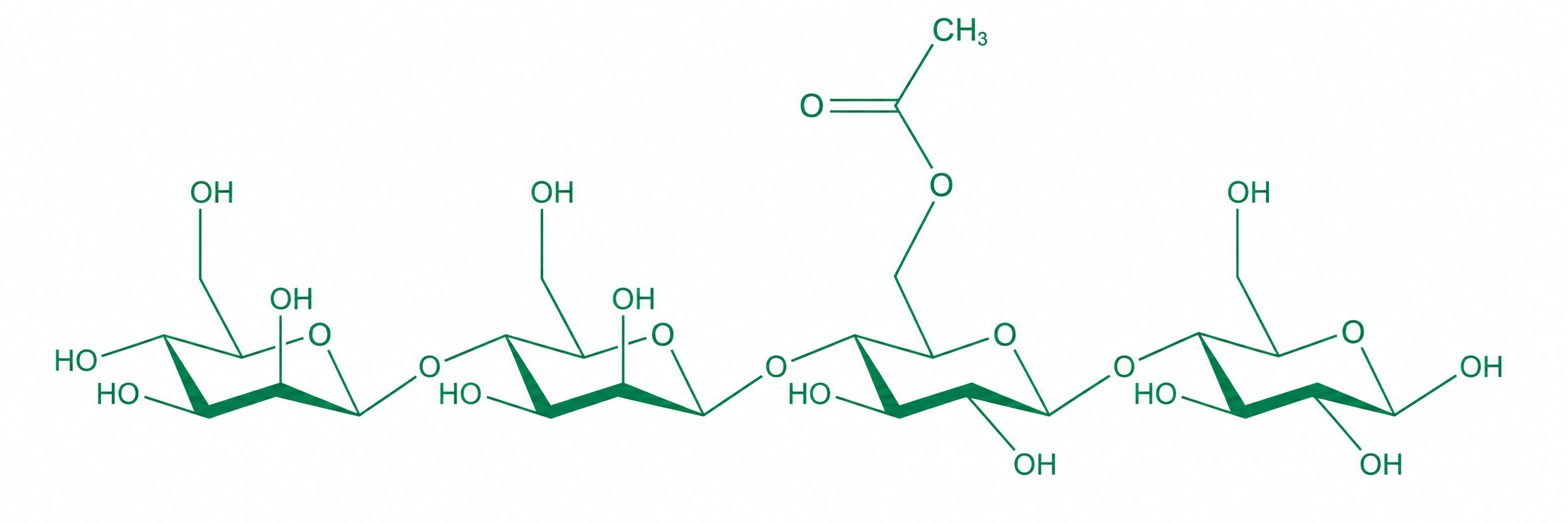
Glucomannan is the main component of konjac flour. It is a high-molecular-weight polysaccharide composed of D-mannose and D-glucose in a molar ratio of 1.6:1. Branch points occur approximately every 50 to 60 units, with acetyl groups present at around one per 19 sugar residues.
3. Konjac glucomannan analytical methods
Glucomannan content: As glucomannan is a dietary fibre, its level in konjac powder is determined by total dietary fibre analysis.
Viscosity: glucomannan viscosity is only meaningful when reported at a defined viscometer speed (rpm) and under comparable rehydration conditions.
Indeed, glucomannan viscosity decreases as shear increases, so the viscosity measurement conditions should be clearly stated in the specifications.
Viscosity comparisons between different konjac glucomannan products should therefore be performed at the same rotational speed (rpm). The diagram below shows that the viscosity of a product measured at 10 rpm is twice as high as that measured at 30 rpm.
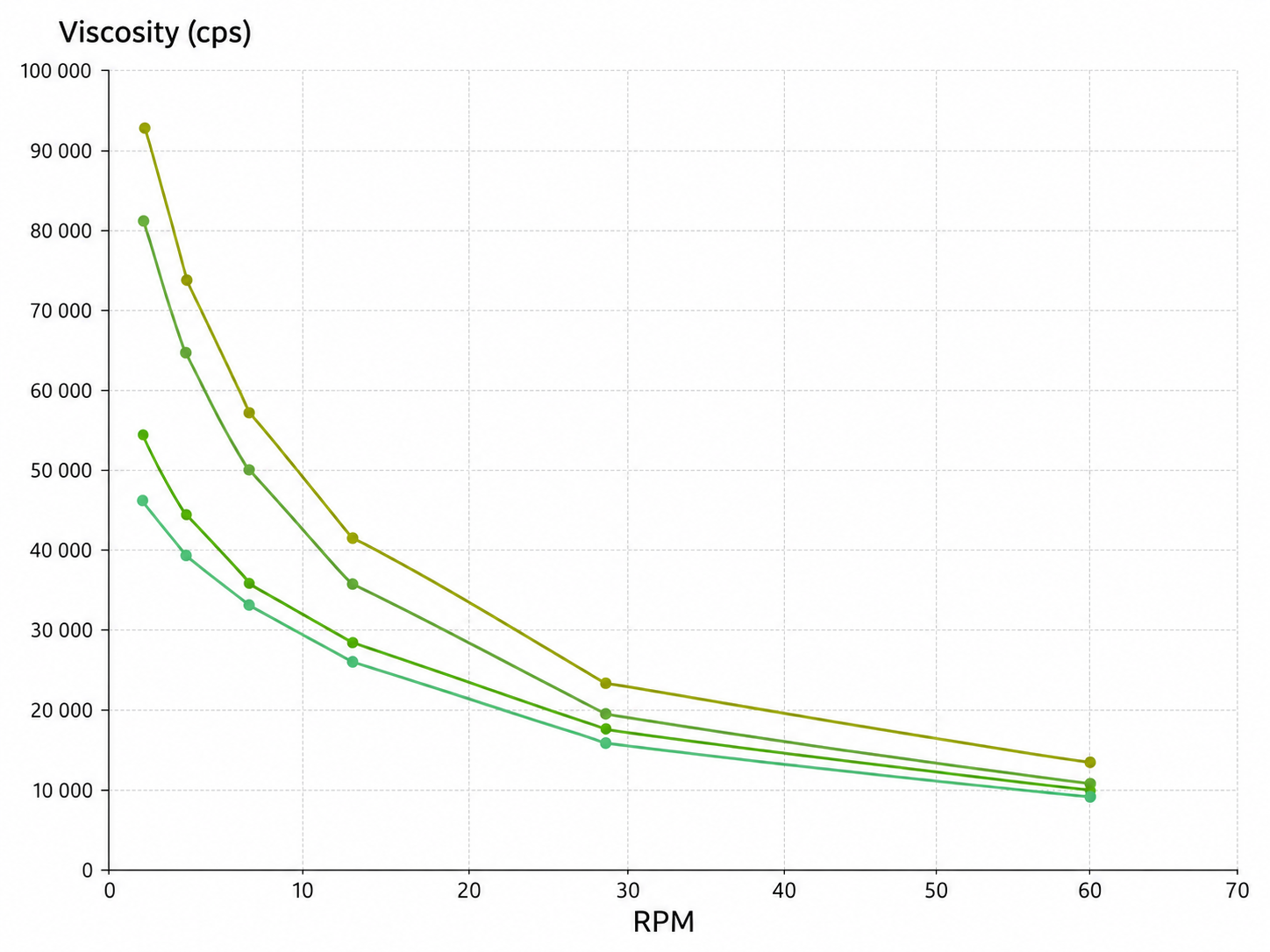
Viscosity of different konjac glucomannans as a function of shear rate.
1. Mechanical effects on satiety and weight management
2. Reduction of postprandial blood glucose and cholesterol
3. Prebiotic effects on the gut microbiota
1. Mechanical effects on satiety and weight management
Konjac glucomannan is a high-molecular-weight polysaccharide that can absorb up to 50 times its own weight in water, forming a highly viscous gel in the stomach. This rheological behaviour is central to its satiating effect (Parry, 2009). Once ingested, the resulting increase in gastric volume promotes mechanical distension and activates mechanoreceptors in the stomach wall, helping trigger an earlier feeling of fullness (Salleh et al., 2019). The increased viscosity of the chyme also slows gastric emptying, helping extend postprandial satiety (Shang et al., 2020).
From a clinical perspective, Birketvedt et al. (2005) reported significant weight loss with glucomannan supplementation in a controlled trial involving 176 overweight subjects following a calorie-restricted diet. Earlier, in a randomized, double-blind trial in obese patients, Walsh et al. (1984) found that 3 g/day for 8 weeks produced greater weight loss than placebo.
In a controlled crossover trial, Shang et al. (2020) incorporated 4 g of glucomannan into a test meal and showed that, by increasing the viscosity of gastric contents, glucomannan significantly delayed gastric emptying. This higher viscosity was associated with increased levels of satiety-related hormones (GLP-1, PYY, CCK) and reduced ghrelin levels, leading to a measurable decrease in hunger and food intake at the following meal.

2. Reduction of postprandial blood glucose and cholesterol
Beyond its bulking effect, the viscous gel formed by konjac glucomannan may act as a diffusion barrier in the intestine, limiting the access of digestive enzymes to their substrates and slowing the absorption of glucose and lipids (Parry, 2009). This mechanism may help attenuate postprandial glucose spikes and support improvements in selected lipid markers.
With regard to lipid metabolism, a 2008 meta-analysis of 14 randomized controlled trials reported that konjac glucomannan supplementation was associated with significant reductions in total cholesterol (≈ −19 mg/dL) and LDL-cholesterol (≈ −16 mg/dL) (Sood et al., 2008). A more recent analysis including 12 trials confirmed a mean LDL reduction of approximately 0.35 mmol/L at doses close to 3 g/day (Ho et al., 2017).
In terms of glycaemic regulation, a meta-analysis of 12 randomized controlled trials (≈ 840 participants) showed that supplementation with approximately 3 g/day of glucomannan for 4 to 8 weeks significantly reduced fasting blood glucose and fasting insulin levels (Ashtary-Larky et al., 2022). Complementary evidence from a meta-analysis conducted in 440 patients with type 2 diabetes confirmed significant reductions in fasting blood glucose, postprandial blood glucose and glycated haemoglobin (HbA1c) after 4 to 12 weeks at 3–5 g/day (Zhang et al., 2023).

3. Prebiotic effects on the gut microbiota
Glucomannan is a fermentable soluble fibre that can serve as a substrate for the gut microbiota and support the growth of beneficial bacteria such as bifidobacteria and lactobacilli. Its fermentation leads to the production of short-chain fatty acids (SCFAs), including butyrate, which helps maintain intestinal barrier integrity and regulate local immune responses. SCFA production also lowers intestinal pH, contributing to the maintenance of a balanced gut microbiota (Changchien et al., 2020).
In healthy adults, these mechanisms have been supported by a controlled study showing that konjac glucomannan supplementation (4.5 g/day) increased bifidobacteria and lactobacilli, as well as SCFA levels, while reducing faecal pH (Chen et al., 2006).
A randomized, double-blind trial also reported an increase in these beneficial bacteria, together with reductions in β-glucuronidase*, secondary bile acids and faecal water toxicity (Wu et al., 2011). These findings suggest that glucomannan may help promote a healthier intestinal environment and has potential as a prebiotic ingredient.
*Bacterial enzyme involved in the reactivation of potentially harmful compounds.

Sources
- Birketvedt, G. S., Shimshi, M., Erling, T., & Florholmen, J. (2005). Experiences with three different fiber supplements in weight reduction. Medical Science Monitor, 11(1), PI5–PI8.
- Parry, J.-M. (2009). Konjac glucomannan. In Food stabilisers, thickeners and gelling agents. Wiley-Blackwell.
- Salleh, S. N., et al. (2019). Effects of soluble dietary fibre supplementation on energy intake and perceived satiety: A systematic review. Nutrients, 11(2), 310.
- Shang, L., et al. (2020). Effects of konjac glucomannan viscosity on gastric emptying and appetite regulation. Food & Function, 11(9), 7596–7610.
- Walsh, D. E., Yaghoubian, V., & Behforooz, A. (1984). Effect of glucomannan in obese patients: A clinical study. International Journal of Obesity, 8(4), 289–293.
- Ashtary-Larky, D., Ravasi, A., Akbari-Polak, R., Bagheri, R., Dutheil, F., Wong, A., & Sahebkar, A. (2022). The effect of glucomannan supplementation on fasting and postprandial blood glucose in adults: A systematic review and meta-analysis of randomized controlled trials. Diabetes & Metabolic Syndrome: Clinical Research & Reviews, 16(5), 102569.
- Ho, H. V. T., Jovanovski, E., Zurbau, A., Blanco Mejia, S., Sievenpiper, J. L., Au-Yeung, F., Jenkins, A. L., & Vuksan, V. (2017). A systematic review and meta-analysis of randomized controlled trials on the effects of konjac glucomannan on LDL cholesterol and non-HDL cholesterol. The American Journal of Clinical Nutrition, 105(5), 1239–1247.
- Sood, N., Baker, W. L., & Coleman, C. I. (2008). Effect of glucomannan on plasma lipid and glucose concentrations, body weight, and blood pressure: Systematic review and meta-analysis. The American Journal of Clinical Nutrition, 88(4), 1167–1175.
- Zhang, Z., Zhang, Y., Tao, X., Li, J., & Chen, L. (2023). Effects of glucomannan supplementation on type II diabetes mellitus in humans: A meta-analysis. Journal of Clinical Medicine, 12(3), 1080.
- Changchien, C.-H., Han, Y.-C., & Chen, H.-L. (2020). Konjac glucomannan polysaccharide and inulin oligosaccharide enhance the colonic mucosal barrier function and modulate gut-associated lymphoid tissue immunity in C57BL/6J mice. British Journal of Nutrition, 123(3), 319–327. https://doi.org/10.1017/S000711451900285X
- Chen, H.-L., Cheng, H.-C., Liu, Y.-J., Liu, S.-Y., & Wu, W.-T. (2006). Konjac acts as a natural laxative by increasing stool bulk and improving colonic ecology in healthy adults. Nutrition, 22(11–12), 1112–1119. https://doi.org/10.1016/j.nut.2006.08.009
- Wu, W.-T., Cheng, H.-C., & Chen, H.-L. (2011). Ameliorative effects of konjac glucomannan on human faecal β-glucuronidase activity, secondary bile acid levels and faecal water toxicity towards Caco-2 cells. British Journal of Nutrition, 105(4), 593–600. https://doi.org/10.1017/S0007114510004009
Konjac gum and konjac glucomannan are authorised as thickening additives under Commission Regulation (EU) No. 231/2012 laying down specifications for food additives.
- E425 (i): konjac gum
- E425 (ii): konjac glucomannan
In accordance with Regulation (EC) No. 1333/2008, food additives are substances added to food for a technological purpose. Therefore, when konjac gum or konjac glucomannan are used to texture food products, they are considered additives and the “Specific Maximum Level” of 10 g/kg of food applies (Regulation (EU) No. 1129/2011).
However, when they are used for nutritional purposes, as in food supplements, konjac gum and konjac glucomannan are no longer additives and the “Specific Maximum Level” does not apply. They can therefore be incorporated into capsules at much higher doses.
Konjac glucomannan is listed in the 4th edition of the Food Chemical Codex (1996).
The US Food and Drug Administration (FDA) has classified konjac flour as “generally recognized as safe” (GRAS) (FDA, 1997).
1. Capsules and tablets: 40 mesh Conventional and Organic grades
2. Nutritional beverages and RTD products: 120 mesh Low-Viscosity grade
3. For other applications: 120 mesh Conventional and Organic grades
1. Capsules and tablets: 40 mesh Conventional and Organic grades
The 40 mesh grade of konjac glucomannan is particularly well suited to capsules thanks to its high bulk density, which helps optimise dosage formats.
Functional properties
- High fibre content (TDF/DM ≥ 95%) : enables 1 g of glucomannan to be delivered in 2 size 0 capsules
- High bulk density : optimised filling and compact formats
- Gradual hydration after ingestion
Typical applications
- Slimming food supplements
- Satiety / weight management formulas
- Products for digestive comfort
2. Nutritional beverages and RTD products: 120 mesh Low-Viscosity grade
The low-viscosity (LV) grade is designed for liquid applications requiring high fibre fortification without compromising flowability.
Functional properties
- Low viscosity, even at high inclusion levels : fibre enrichment without excessive thickening
- Non-gelling behaviour : maintains the flowability of liquid matrices
- Rapid hydration : easy incorporation and uniform dispersion
- Suspension stabilisation : compatible with complex liquid matrices (proteins, particulates)
Typical applications
- Fibre-enriched functional beverages
- Nutritional RTD products
3. For other applications: 120 mesh Conventional and Organic grades
The fine particle size of 120 mesh glucomannan enables rapid and uniform dispersion.
Functional properties
- Rapid cold hydration → efficient dispersion and reduced lump formation
- Fine particle size → improved solubilisation and blend homogeneity
- Controlled viscosity development → stability and texture control
1. Nutrition claims
Glucomannan is a fibre in accordance with Regulation (EU) No. 1169/2011 on the provision of food information to consumers (FIC Regulation).
Glucomannan-based food products may claim to be:
- “source of fibre” if they contain at least 3 g of fibre per 100 g or 1.5 g of fibre per 100 kcal.
- “high in fibre” if they contain at least 6 g of fibre per 100 g or at least 3 g per 100 kcal.
2. Health claims
According to Commission Regulation (EU) No. 432/2012, two health claims may be made on foods and food supplements containing konjac glucomannan.
| Glucomannan (konjac mannan) |
Glucomannan contributes to the maintenance of normal blood cholesterol levels The claim may be used only for food which provides a daily intake of 4 g of glucomannan. The claim may be used if the consumer is informed that the beneficial effect is obtained with a daily intake of 4 g of glucomannan. |
Warning of choking to be given for people with swallowing difficulties or when ingesting with inadequate fluid intake. Advice on taking with plenty of water to ensure the substance reaches the stomach. |
| Glucomannan (konjac mannan) |
Glucomannan in the context of an energy-restricted diet contributes to weight loss The claim may be used only for food which contains 1 g of glucomannan per quantified portion. The claim may be used if the consumer is informed that the beneficial effect is obtained with a daily intake of 3 g of glucomannan in three doses of 1 g each, taken with 1 to 2 glasses of water before meals and in the context of an energy-restricted diet. |